
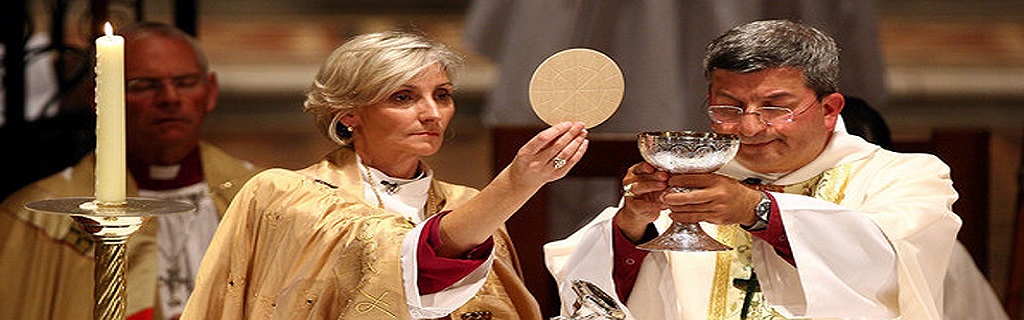
Icebreaker
• Emilia was a devoted Catholic who loved the Church deeply and desired nothing more than to dedicate her entire life to serving God.
• Over time, she became convinced that God was calling her to the ministerial priesthood.
• She sought guidance from priests, theologians, and Church authorities, hoping that there might be a path for her vocation.
• Everywhere she turned, she encountered the same answer: the Catholic Church does not ordain women to the ministerial priesthood.
• Deeply hurt and frustrated, Emilia began to question whether the Church was discriminating against women.
• “If women cannot become priests,” she argued, “will they also be excluded from heaven? Salvation is not based on gender.”
• She further maintained that the exclusion of women from the priesthood reflected ancient Jewish culture rather than God’s eternal will.
• Her friends sympathised with her pain but reminded her that the Church’s teaching was rooted in Christ’s example, Apostolic Tradition, and the theology of Holy Orders rather than prejudice.
• They also explained that the issue was not one of superiority or inferiority but of vocation and sacramental symbolism.
• Emilia found herself standing at a crossroads.
• Was the Church denying women equal dignity, or was there a deeper theological reason behind her teaching?
Does the Church Reject Gender Equality by Reserving Priesthood to Men?
Emilia’s struggle reflects one of the most frequently discussed questions in contemporary Catholic life. In an age that rightly emphasizes the dignity, rights, and contributions of women, many people find it difficult to understand why the Catholic Church continues to reserve priestly ordination to men.
There is increasing pressure to evaluate the Church according to modern political, social, and cultural standards. While the Church wholeheartedly supports the recognition of the dignity, gifts, and indispensable contribution of women in society and in the Church, she also understands herself differently from merely human institutions. She is not simply a democratic organisation that modifies her essential constitution according to changing social expectations. Rather, she is of divine origin, entrusted by Christ with a spiritual mission and sacramental structure.
The Church has consistently taught the radical equality of all the baptised as children of God. Every member of the People of God possesses equal human dignity before God. Nevertheless, equality of dignity does not imply identity of vocation or function. From the beginning, the Church has understood herself as hierarchically and sacramentally constituted, with distinct yet complementary roles among her members.
As the Letter to the Hebrews reminds us:
“No one takes this honour upon himself, but only when called by God, just as Aaron was.” (Heb. 5:4; cf. Ex. 28:41; 29:29–30)
Likewise, Christ entrusted to His Church the authority to bind and loose in matters concerning faith and ecclesial discipline (Mt. 16:18–19). The ministerial priesthood therefore exists not in competition with the common priesthood of all believers (1 Pet. 2:9), but in service to it.
Why Has the Church Never Ordained Women to the Ministerial Priesthood?
Emilia believed that the exclusion of women resulted merely from ancient Jewish culture.
The Church, however, sees the matter differently.
Throughout His public ministry, Jesus consistently elevated the dignity of women in ways that were remarkable for His time. He spoke publicly with women, accepted them among His disciples, defended their dignity, healed them, entrusted important missions to them, and revealed Himself first after the Resurrection to Mary Magdalene.
Most significantly, His own mother—the Blessed Virgin Mary—occupies the highest place among all creatures.
Yet despite His freedom from social conventions, Jesus did not choose any woman among the Twelve Apostles.
The early Church faithfully maintained this pattern.
Women exercised numerous important ministries and served generously within Christian communities, including the ministry of deaconesses in certain contexts. Nevertheless, they were never ordained as presbyteroi (priests) or episcopoi (bishops). St. Paul likewise gives instructions reflecting this ecclesial practice (1 Cor. 14:34–35; 1 Tim. 2:11–15).
The Church therefore understands her practice not as a later invention but as faithful continuity with the example established by Christ Himself and preserved through Apostolic Tradition.
Ordination is not simply one ministry among many; it belongs to the sacramental structure Christ entrusted to His Church.
Does Reserving Priesthood to Men Mean Women Are Less Important?
One of Emilia’s deepest concerns was whether refusing priestly ordination implied that women were somehow inferior to men.
The Church answers this decisively in the negative.
The dignity of women has consistently been defended and promoted within Catholic teaching. Pope St. John Paul II’s Apostolic Letter Mulieris Dignitatem (1988) beautifully reflects on the vocation and dignity of women, while Pope Paul VI approved the 1976 Declaration Inter Insigniores, explaining why priestly ordination remains reserved to men.
Women participate fully in the life and mission of the Church through numerous ministries and responsibilities flowing from their baptism and canonical rights as members of the faithful (Canons 208–231).
Indeed, not every man becomes a priest either.
Priesthood is not a reward, privilege, or promotion. It is a particular vocation of service.
Throughout Church history, countless women have exercised extraordinary influence without priestly ordination: saints, mystics, founders of religious communities, doctors of the Church, missionaries, educators, reformers, theologians, and, in recent years, leaders within the Roman Curia.
The greatest human person after Christ is not a priest but the Blessed Virgin Mary.
Holiness—not ordination—is the highest vocation within Christianity.
Why Does the Church Insist That the Priest Must Be Male?
The answer lies not in power but in sacramental theology.
When celebrating the sacraments, especially the Eucharist, the priest acts in persona Christi—in the person of Christ. He represents Christ Himself, the Bridegroom who gives Himself to His Bride, the Church.
As St. Thomas Aquinas explains, the priest sacramentally represents Christ in whose person he pronounces the words of consecration (Summa Theologiae III, q. 83, a. 1).
The maleness of Christ therefore belongs to the sacramental sign itself, not because men are superior, but because the sacrament visibly signifies Christ the Bridegroom in relation to His Bride, the Church.
For this reason, the Church understands that she has no authority to alter what Christ Himself established.
Canon Law therefore teaches:
“Only a baptized male validly receives sacred ordination.” (Canon 1024)
Furthermore, Canon 1379 §3 establishes canonical penalties for attempting to confer or receive priestly ordination contrary to this teaching.
Pope St. John Paul II definitively clarified the matter in Ordinatio Sacerdotalis (1994):
“The Church has no authority whatsoever to confer priestly ordination on women, and this judgment is to be definitively held by all the Church’s faithful.” (Ordinatio Sacerdotalis, 4)
The following year, the Congregation for the Doctrine of the Faith, under Cardinal Joseph Ratzinger, confirmed that this teaching belongs to the Church’s definitive teaching.
How Can Women Continue to Exercise Their Gifts Within the Church?
Emilia’s desire to serve God was sincere.
The Church not only recognises such generosity but actively encourages women to exercise their gifts as fully as possible within the vocation God has entrusted to them.
More opportunities should continue to be created for women to contribute to evangelisation, catechesis, education, theological scholarship, pastoral leadership, charitable works, administration, missionary activity, family ministry, youth formation, and many other important areas.
None of these require priestly ordination to possess immense value.
The Church therefore encourages women not to measure their vocation solely by priesthood but by holiness and faithful service.
Every vocation contributes to the building up of Christ’s Body.
The diversity of vocations reflects the richness—not the inequality—of the Church
Conclusion: What Should Emilia Do Now?
Emilia’s disappointment was genuine.
Her longing to serve Christ wholeheartedly deserves admiration rather than ridicule.
Yet sincere desire alone cannot determine the nature of a sacrament.
The Church believes she is not free to redefine what Christ Himself instituted.
For this reason, the reservation of priestly ordination to men is understood not as discrimination but as fidelity to Christ’s example, Apostolic Tradition, and the sacramental nature of Holy Orders.
Perhaps Emilia’s greatest question was never whether women could become priests.
Perhaps it was whether God could still accomplish something beautiful through her life without priestly ordination.
The Church’s answer is an emphatic yes.
History repeatedly shows that some of the greatest saints, evangelisers, theologians, reformers, missionaries, educators, and spiritual mothers of Christianity were women who transformed the Church without ever receiving Holy Orders.
Like Emilia, many women sincerely desire to serve God more deeply.
The challenge is not to seek a vocation God has not entrusted to them, but to discover and embrace the vocation He has uniquely prepared for them.
For in God’s Kingdom, greatness is never measured first by office or title, but by holiness, faithful service, and love. As Christ Himself reminds us:
“Whoever would be great among you must be your servant.” (Mt. 20:26)
And that vocation—to holiness—is offered equally to every man and every woman.
Chikwado Brendan John Paul
Join the Mission
Whether you are a student, teacher, parent, professional, artist, writer, musician, designer, programmer, or simply someone seeking to grow in the Catholic faith, there is a place for you at CLIFF. Here, you will be encouraged to deepen your faith, share your gifts, and place your talents at the service of the Gospel. We believe that every God-given talent can become a channel of grace for building God’s Kingdom and serving the mission of the Church.
Ready To Begin Your Journey?
Join a growing family of Catholics committed to knowing the faith, living the faith, and sharing the faith with the world.