
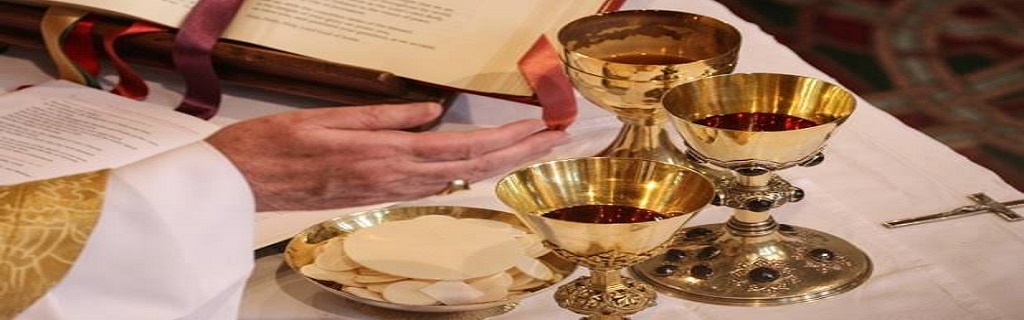
Icebreaker
• Jane was a recent convert to the Catholic faith and eagerly attended the parish converts’ instruction classes.
• One evening, Fr. Joseph explained that the Holy Mass is the highest form of prayer in the Catholic Church because it makes present Christ’s sacrifice on Calvary.
• He further taught that the faithful could request or “book” a Mass for particular intentions by offering a small stipend.
• Jane was visibly puzzled.
• Coming from a Protestant background, she had always understood Holy Communion as merely a symbolic remembrance of Christ’s body and blood.
• She found it difficult to understand how the Mass could be the same sacrifice as Calvary.
• Even more confusing was the idea of offering money when requesting a Mass.
• “Does this mean Catholics pay priests to pray for them?” she wondered.
• Fr. Joseph smiled, realizing that Jane’s questions were shared by many people both inside and outside the Church.
• What exactly is the Holy Mass, and why does the Church allow Mass intentions with a small offering?
Why Is the Holy Mass Called the Highest Form of Prayer?
Jane’s confusion is understandable because many Christians have never been introduced to the Catholic understanding of the Eucharist. If the Mass were merely a memorial meal or symbolic gathering, then offering a Mass for particular intentions would indeed seem unnecessary. The Church, however, teaches something much deeper.
The Holy Mass is the supreme sacrifice of Jesus Christ Himself, entrusted to the Church for the salvation and sanctification of His people. At every Mass, the ordained priest acts in persona Christi Capitis—in the person of Christ the Head—not as someone replacing Christ but as His visible minister and representative.
For this reason, the sacrifice offered on the altar is not different from the sacrifice Christ offered once and for all on Calvary. Nor is it a repetition of His sacrifice. Rather, it is its re-presentation—that is, the once-for-all sacrifice of Christ is sacramentally made present in an unbloody manner.
As Jesus commanded at the Last Supper:
“Do this in memory of me.” (Lk. 22:19–20; cf. Mt. 26:26–28; Mk. 14:22–25; 1 Cor. 11:24–25; CCC 1330)
This explains why the Mass is regarded as the highest prayer of the Church. It is fundamentally Christ’s own prayer and sacrifice offered to the Father. Since Christ is the eternal High Priest, His sacrifice possesses infinite, inexhaustible, and eternal value. The effectiveness of the Mass therefore depends primarily upon Christ Himself and not upon the personal holiness or imperfections of either the priest or the congregation.
For this reason, St. Paul encourages believers to celebrate this mystery frequently:
“For as often as you eat this bread and drink the cup, you proclaim the Lord’s death until he comes.” (1 Cor. 11:26)
How Does the Mass Make Present Christ's Sacrifice on Calvary?
One of Jane’s greatest difficulties was understanding how today’s Mass could be connected to an event that occurred over two thousand years ago.
The Church teaches that the Mass is simultaneously memorial, reality, and anticipation.
It recalls God’s saving actions throughout salvation history—from the Exodus and Passover to Christ’s Passion, Death, and Resurrection—while at the same time making Christ’s sacrifice truly present here and now. It also anticipates the heavenly banquet that awaits God’s people at the end of time (Rev. 19:9).
Thus, every Mass unites the past, present, and future in the mystery of Christ.
During every Eucharistic Prayer, the Church proclaims:
“We proclaim your Death, O Lord, and profess your Resurrection until you come again.”
The Mass is therefore not simply remembering something that once happened; it is participating sacramentally in the saving mystery that remains eternally effective.
Catholic theology expresses this through the principle of ex opere operato, meaning that the sacraments are effective by virtue of Christ’s saving action itself rather than by the personal worthiness of the minister (ex opere operantis).
This truth should never encourage negligence or laxity. Instead, it reminds both priest and faithful that Christ remains the principal actor at every Mass, while each participant receives His grace according to his or her spiritual disposition.
Why Does the Church Allow People to Request Mass Intentions with an Offering?
Jane’s second question concerned the practice commonly known as “booking Mass.”
At first glance, it can appear as though Catholics are paying priests to pray for them. Yet this misunderstanding disappears once the true nature of the Mass stipend is understood.
The Church does not regard this offering as a payment, tax, or purchase of God’s blessings.
Rather, it is a freewill offering that expresses the faithful person’s participation in Christ’s sacrifice and in the prayer of the Church (Canons 945–946).
Because the value of the Holy Mass is infinite, no amount of money could ever purchase its spiritual fruits. God’s grace remains entirely free.
Historically, such offerings also helped support the material needs of priests and the celebration of the liturgy. Today, however, priests ordinarily receive their principal support through other legitimate means. The Mass offering therefore remains primarily a symbolic act of faith, gratitude, thanksgiving, and personal participation rather than financial compensation.
In many dioceses in Nigeria, the recommended offering is intentionally kept very small—often between ₦50 and ₦100—precisely to emphasize that no one is buying God’s blessings.
Indeed, Canon 848 explicitly teaches that no one should ever be denied the sacraments because of inability to make the customary offering.
Does Giving a Mass Offering Mean We Are Buying God's Blessings?
The Church has always condemned every appearance of simony—the attempt to buy or sell spiritual realities.
For this reason, every semblance of commercialising the sacraments, trafficking in sacred things, or making God’s grace dependent upon financial contributions must be firmly rejected (Canons 947, 1385).
Jane’s concern therefore touches upon an issue the Church herself has consistently opposed.
God’s blessings cannot be bought.
The Mass cannot be purchased.
The priest’s prayers cannot be commercialized.
The Mass offering is better understood as a gift (stips) rather than a wage or payment (stipendium). It represents our own small self-offering united with Christ’s perfect sacrifice.
A helpful biblical example appears in 2 Maccabees 12:38–46, where Judas Maccabaeus collected silver to offer sacrifice and prayers for fallen soldiers. Likewise, St. Paul reminds believers that those who minister at the altar share in the offerings connected with the altar (1 Cor. 9:7–14).
The distinction remains important.
The offering accompanies the Mass.
It never purchases the Mass.
Why Request a Particular Mass Intention if Every Mass Benefits Everyone?
Jane finally wondered why anyone should request a particular Mass if every Mass already benefits the whole Church.
Indeed, every Eucharistic celebration is offered for the entire Church—for the living and the dead, those present and absent, and ultimately for the salvation of the whole world.
Nevertheless, the Church also recognizes the value of presenting specific intentions.
Jesus Himself taught:
“Ask, and it will be given to you; seek, and you will find; knock, and it will be opened to you.” (Mt. 7:7)
Although God already knows every need, He invites His children to bring those needs before Him in faith.
Requesting a Mass for a deceased loved one, for healing, thanksgiving, birthdays, vocations, examinations, family intentions, or any other worthy cause expresses confidence in Christ’s sacrifice and entrusts those intentions explicitly to the prayer of the Church.
When a Mass intention is formally accepted, the priest assumes the obligation of offering that particular Mass for the donor’s stated intention.
This does not exclude other intentions. During every Mass, countless silent intentions are offered by members of the congregation, while the Universal Prayer includes wider petitions for the Church and the world. Bishops and parish priests likewise celebrate Masses for the People (Missa pro populo) in fulfilment of their pastoral obligations (Canon 534).
Thus, specific Mass intentions enrich rather than limit the universal fruits of the Eucharistic sacrifice.
Conclusion: What Did Jane Finally Discover?
At the beginning of Fr. Joseph’s instruction, Jane believed that Catholics paid priests to pray for them and that the Eucharist merely symbolized Christ’s sacrifice.
By the end of the lesson, she had discovered something far richer.
The Holy Mass is not merely a symbolic remembrance.
It is Christ Himself acting through His Church.
It is the sacramental making-present of the one eternal sacrifice of Calvary.
It is the highest prayer because it is Christ’s own perfect offering to the Father.
She also came to understand that the small Mass offering is not a purchase of grace but a humble expression of faith, gratitude, and participation in Christ’s sacrifice. No one buys God’s blessings, and no one should ever be denied the Holy Mass because of poverty.
Jane’s questions are still asked today by many Catholics and non-Catholics alike.
The Church’s answer remains both simple and profound:
The Holy Mass is God’s greatest gift to His Church.
Its value is infinite.
Its grace is freely given.
And whenever we request that a Mass be offered for a particular intention, we are not paying for Christ’s sacrifice—we are lovingly placing our own intentions upon the altar, uniting them with the one perfect sacrifice through which the Father continues to pour out His blessings upon the whole world.

Chuks Hycent Odega
Join the Mission
Whether you are a student, teacher, parent, professional, artist, writer, musician, designer, programmer, or simply someone seeking to grow in the Catholic faith, there is a place for you at CLIFF. Here, you will be encouraged to deepen your faith, share your gifts, and place your talents at the service of the Gospel. We believe that every God-given talent can become a channel of grace for building God’s Kingdom and serving the mission of the Church.
Ready To Begin Your Journey?
Join a growing family of Catholics committed to knowing the faith, living the faith, and sharing the faith with the world.