
Icebreaker
• Mr. and Mrs. Okeke welcomed their first child with great joy.
• A few weeks later, their parish priest encouraged them to bring the child for baptism.
• The family replied that they were still planning the child’s dedication ceremony and would baptize the baby later.
• Months passed as they waited to raise money for food, entertainment, decorations, and guests.
• Each time baptism was mentioned, they responded: “We want to do it properly.”
• During a family gathering, an elderly catechist asked a simple question: “If baptism truly makes a child a member of God’s family, what exactly are you waiting for?”
• That question sparked a deeper conversation about baptism, dedication, churching, presentation, thanksgiving ceremonies, and what the Church actually teaches.
Why Is Baptism the Foundation of the Christian Life?
The experience of the Okeke family reflects a common situation in many Catholic communities today. Many parents sincerely desire God’s blessings upon their children but sometimes place greater emphasis on customs and celebrations than on the sacrament itself. Consequently, baptism is delayed while families prepare for what is commonly called child dedication, presentation, churching, or thanksgiving ceremonies.
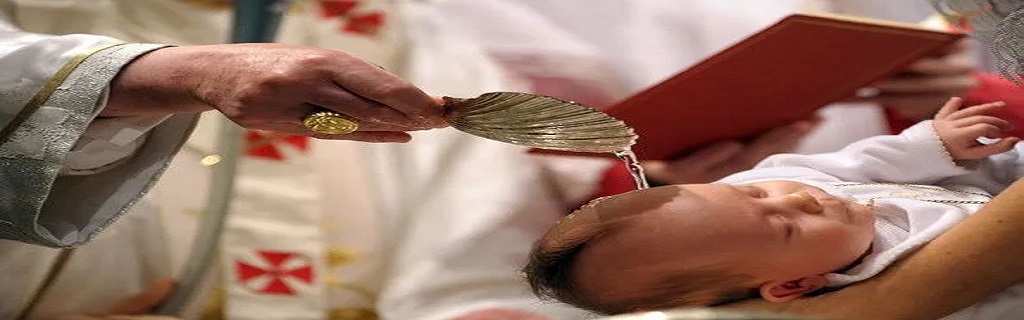
Yet the Church teaches that baptism is far more than a beautiful religious ceremony. It is the sacrament instituted and dignified by Christ Himself, the gateway to all the other sacraments, the foundation of the Christian life, and the ordinary means by which one is incorporated into the family of God, the Church. It is both an initiation into Christ and a necessary means of salvation.
Unlike sacramentals, however beautiful or popular they may be, baptism possesses a unique dignity and efficacy because it actually communicates sanctifying grace. Through baptism, a child becomes a member of Christ’s Body, receives new life in grace, and begins the journey of Christian discipleship.
For this reason, no ceremony, however meaningful, can equal or replace what God Himself accomplishes through baptism.
Is Baptism the True Presentation and Dedication of a Child?
One may rightly say that baptism is the highest presentation, consecration, and dedication that parents can offer their child to God.
There is no dedication greater than baptism because it is through baptism that a child is fully united to Christ, incorporated into His Mystical Body, and invited to remain in Him:
“Abide in me” (Jn. 15). Many people appeal to the Presentation of Jesus in the Temple (Lk. 2:22–40) as the biblical basis for modern child dedication ceremonies. However, that event belonged to the Old Covenant. It was connected with the redemption of the firstborn son, circumcision, and the purification rites prescribed under the Mosaic Law (Lev. 12; Ex. 13:12–15).
These rites have found their fulfilment in Christ and in the sacrament of baptism.
Moreover, if one insists on applying Luke’s account literally, the Temple presentation applied specifically to the firstborn male child, whereas baptism is intended for every human person without distinction between male and female.
Some also argue that parents merely present the child to the priest who then dedicates the child to God.
Yet baptism itself already accomplishes both presentation and dedication in the fullest possible sense.
Therefore, the Church encourages parents to baptize their children as soon as reasonably possible rather than postponing the sacrament while waiting for another ceremony.
How Should Catholics Understand Thanksgiving Celebrations and Cultural Practices?
Following baptism, families may certainly request a Mass of Thanksgiving to express gratitude to God for the gift of their child.
Such celebrations are beautiful expressions of faith but remain optional rather than obligatory.
Unfortunately, cultural expectations sometimes overshadow the simplicity and beauty of baptism itself. Families often postpone the sacrament while trying to organize elaborate receptions, decorations, entertainment, and expensive social gatherings.
Certain customs have also developed that require careful discernment.
For example, where it is customary for the priest to lift up the child after baptism, the infant should never be placed upon the altar as though being offered in sacrifice, for Christ alone is the true Sacrificial Lamb.
Likewise, the traditional belief that a nursing mother remains ritually unclean or should not enter the Church after childbirth does not belong to Catholic doctrine. The Church is concerned only with the mother’s health and physical recovery.
Not every cherished cultural custom necessarily expresses authentic Catholic teaching.
Should Financial Difficulties Ever Delay the Baptism of a Child?
The experience of the Okeke family also raises another important pastoral concern.
Many baptisms are delayed because parents feel obliged to organise expensive celebrations before bringing their child to church.
Yet these financial expectations arise largely from social pressure rather than from the requirements of the Church.
While Catholics are encouraged to support the life of the parish through donations and contributions, financial considerations must never become obstacles to receiving the sacraments.
The sacraments are not commodities to be bought or sold.
Baptism is necessary.
It is not for sale.
Thanksgiving celebrations remain entirely optional.
To deny or delay baptism solely because of financial hardship would constitute a grave scandal and could amount to the sin of simony.
The Church therefore urges families to place the sacrament before the celebration
Why Does the Church Teach That Baptism Is Necessary for Salvation?
The necessity of baptism comes directly from Christ Himself:
“Unless one is born of water and Spirit, he cannot enter the kingdom of God” (Jn. 3:5).
The Apostles faithfully proclaimed this teaching (Acts 2:38), and the Church continues to uphold it (CCC 1250, 1257; Canon 849).
At the same time, the Church also recognizes God’s universal salvific will. God desires the salvation of all people and may communicate His grace in extraordinary ways known fully to Him.
Accordingly, Catholic tradition distinguishes:
- Baptism of Water (CCC 1239, 1278)
- Baptism of Blood (CCC 1258)
- Baptism of Desire (Rom. 2:14–16; CCC 1259–1261; Lumen Gentium 16)
These extraordinary forms demonstrate God’s mercy.
However, they must never become excuses for neglecting sacramental baptism whenever it is availabl
What Responsibilities Do Parents and the Church Share After Baptism?
Baptism is not magic.
Although baptism communicates sanctifying grace, each Christian must continue to cooperate with God’s grace throughout life.
A baptized person who later rejects God may fail to attain salvation, while someone who sincerely responds to God’s grace outside ordinary sacramental circumstances may be saved according to God’s mysterious providence.
Nevertheless, such possibilities should never be used to justify delaying baptism.
Canon 868 teaches that infants should not be denied baptism whenever there is a reasonable hope that they will be raised in the Catholic faith.
This remains true even if the parents are not yet married in the Church or are still regularising aspects of their parish life.
The Church’s responsibility is therefore not merely to enforce regulations but to accompany families pastorally, helping parents fulfil their vocation as the primary educators of their children in the faith.
Patience, evangelization, sound catechesis, and pastoral charity must always guide this accompaniment.
Love wins.
Conclusion: What Was the Elderly Catechist Really Asking the Okeke Family?
When the elderly catechist asked Mr. and Mrs. Okeke,
“If baptism truly makes a child a member of God’s family, what exactly are you waiting for?”
he was asking far more than a practical question.
He was inviting them to rediscover the true priority of Christian life.
Baptism is not merely another ceremony among many.
It is the sacrament instituted by Christ.
It is the gateway to the Christian life.
It is the foundation of all the other sacraments.
It is the ordinary means by which we are incorporated into Christ and His Church.
Indeed,
Baptism is the true presentation.
Baptism is the true dedication.
Baptism is the true consecration.
Baptism is the true incorporation into Christ and His Church.
Everything else is secondary.
Christian parents should therefore never ask first,
“When can we afford the celebration?”
Instead, they should ask,
“When can we bring our child to Christ?”
For no celebration, however elaborate, can ever equal the grace that God freely gives through the Sacrament of Baptism.

Lorem ipsum dolor sit amet, consectetur adipiscing elit. Ut elit tellus, luctus nec ullamcorper mattis, pulvinar dapibus leo.
Join the Mission
Whether you are a student, teacher, parent, professional, artist, writer, musician, designer, programmer, or simply someone seeking to grow in the Catholic faith, there is a place for you at CLIFF. Here, you will be encouraged to deepen your faith, share your gifts, and place your talents at the service of the Gospel. We believe that every God-given talent can become a channel of grace for building God’s Kingdom and serving the mission of the Church.
Ready To Begin Your Journey?
Join a growing family of Catholics committed to knowing the faith, living the faith, and sharing the faith with the world.