
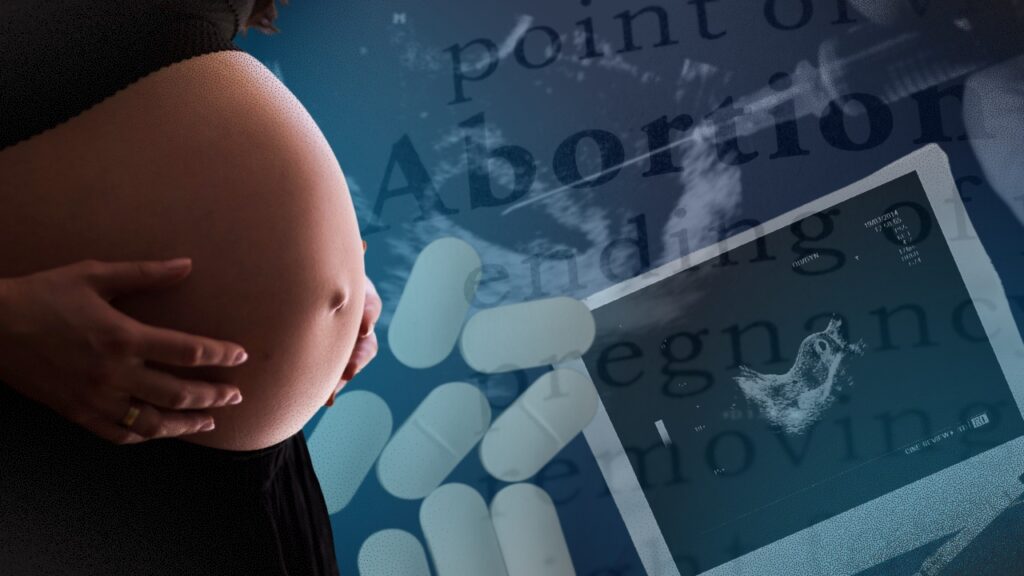
• Sarah was a married and devoted Christian known for her kindness and commitment to her faith.
• She had given birth to all five of her children through caesarean section, each accompanied by serious medical complications.
• Because of the risks involved, her doctor had previously advised her to “tie her womb” to avoid future pregnancies.
• Yet despite the warning, Sarah discovered that she was pregnant again.
• This sixth pregnancy placed her in a difficult and frightening situation.
• Concerned about the dangers to her health, her doctor suggested abortion as the better option.
• Torn between protecting her own life and remaining faithful to her belief in the sanctity of human life, Sarah sought advice from her priest and spent time in prayer.
• The situation left her with painful questions.
• Could abortion ever be justified in such circumstances?
• Was preserving her own life enough reason to end the life growing within her?
• What does the Church teach when a mother and unborn child both appear to be in danger?
Why Is Human Life Sacred from the Moment of Conception?
Sarah’s dilemma is one that many people find emotionally compelling. It is often easier to discuss abortion as an abstract moral issue than when confronted with the reality of medical complications, fear, uncertainty, and the possibility of losing either mother or child. Yet difficult situations do not eliminate the need for moral reflection. The Church’s teaching on abortion is rooted not in insensitivity to suffering but in the conviction that every human life possesses an inviolable dignity bestowed by God Himself.
Any day and at any time, abortion remains one of the most controversial moral issues in society. Religious beliefs, cultural values, political ideologies, personal experiences, and emotional involvement all shape people’s opinions. Many criticise the Church’s teaching as unrealistic, insensitive, or outdated. Others argue that those who defend unborn life cannot fully understand the challenges faced by married couples and families.
However, morality cannot be determined solely by emotions or personal involvement. People often change their opinions when they themselves are affected by a difficult situation, yet subjective preference cannot become the standard of objective moral truth.
It is important to note that this reflection considers abortion within marriage. The Church already teaches that abortion and one of its common causes outside marriage—premarital sexual relations—are grave moral evils. The question here is whether even serious difficulties within marriage can justify the deliberate destruction of innocent human life.
Sarah’s struggle therefore becomes our own: does hardship change the dignity of the unborn child?
Can Difficult Circumstances Ever Justify Abortion?
Sarah’s story reminds us that pregnancy does not occur by accident in the strict sense of the word. Every child comes into existence through the actions of two adults. While a pregnancy may be unexpected or unplanned, responsibility for that life cannot simply disappear because circumstances become difficult.
The unborn child must never become the victim of decisions made by others.
Pregnancy itself is not a disease requiring a cure. Certainly, age, financial hardship, career plans, emotional readiness, family circumstances, and medical complications can make pregnancy extraordinarily difficult. These realities deserve compassionate pastoral care and serious attention. Yet they cannot justify correcting one perceived problem by committing what the Church teaches is an objectively grave moral evil: the direct killing of an innocent human being.
Marriage itself is a vocation of sacrifice, self-giving, and participation in the Cross of Christ. Sarah had already endured five difficult caesarean deliveries, making her sixth pregnancy understandably frightening. Yet the dignity and value of this unborn child cannot be measured by convenience, comfort, fear, or even hardship.
Human life remains the primary right upon which every other human right depends.
How Should Catholics Respond When Medical Advice Conflicts with Moral Teaching?
Sarah’s situation becomes even more emotionally challenging because it involves genuine medical concerns. This is precisely where faith and reason must work together.
The Church deeply respects medical science and acknowledges the extraordinary contribution physicians make in preserving human life. Nevertheless, when medical advice touches upon moral questions, Christians must ask not only what is medically possible but also what is morally permissible.
Sarah’s doctor proposed two options: sterilisation by tying her womb and abortion of the unborn child. From the perspective of Catholic moral teaching, both raise serious moral concerns. Direct sterilisation intended to prevent future pregnancies is generally understood as a contraceptive act, while abortion involves the deliberate termination of innocent human life.
Sarah therefore faces the same question confronted by Christians throughout history:
Should one obey God or merely follow human preference whenever the two appear to conflict?
Abortion can never truly be said to benefit the unborn child. At best, its defenders argue that it benefits the mother, though even this overlooks the emotional, psychological, moral, and spiritual consequences that frequently follow. The unborn child possesses an inherent right to life that cannot simply be removed because his or her existence has become difficult or dangerous.
What Does the Church Teach About Abortion and the Principle of Double Effect?
The Church consistently teaches that abortion ordinarily constitutes a mortal sin because it involves the direct killing of innocent human life. It belongs among those grave sins that cry out to heaven. It is therefore not merely a private decision but a profound moral, social, psychological, and spiritual issue.
Expressions such as “unwanted pregnancy” can sometimes obscure an important truth. No child imposes itself upon two consenting adults. Likewise, appeals to reproductive rights cannot erase the moral status of the unborn child. While parents cooperate in bringing forth new life, neither possesses unlimited authority over that life once conception has occurred.
Even in medically complicated pregnancies, the Church refuses to choose deliberately between the life of the mother and that of the child. Christians are never called to choose evil as a means of achieving good.
Instead, Catholic moral theology proposes the principle of double effect, which distinguishes between directly intending an evil act and permitting an unintended but foreseen consequence.
An action may be morally permissible only when four conditions are fulfilled:
- The action itself must be morally good or morally neutral.
- The bad effect must not be the means of achieving the good effect.
- Only the good effect is intended.
- There must be a proportionately grave reason for allowing the unintended bad effect.
Consequently, in rare medical emergencies, treatment genuinely directed toward saving the mother’s life may indirectly result in the death of the unborn child. Such a death is foreseen but never intended. This differs fundamentally from abortion, where the child’s death is itself the intended objective.
This teaching reflects the perennial moral tradition of the Church (CCC 1737, 1755–1756; Veritatis Splendor, 75–76).
How Does Christ Call Us to Respond to Pregnancy in Times of Fear and Suffering?
Sarah’s experience reminds us that the abortion debate is ultimately about people rather than politics.
The Church never ignores the reality of suffering. She recognises that some pregnancies involve fear, sacrifice, uncertainty, financial hardship, serious illness, and even danger to life.
Yet authentic compassion never demands the intentional destruction of innocent life.
Rather, genuine compassion seeks every morally legitimate means of protecting both mother and child.
The Christian response therefore includes:
- Prayer.
- Pastoral accompaniment.
- Sound medical care.
- Family and community support.
- Courage.
- Trust in God’s providence.
Sarah needed not condemnation but accompaniment.
Like many women facing difficult pregnancies, she required loving guidance, competent medical care, emotional support, and confidence that God never abandons those who place their trust in Him
What Does Sarah's Story Teach Us About the Gospel of Life?
Sarah’s predicament reminds us that abortion is rarely discussed in isolation. Behind every moral debate stands a real family, a frightened mother, an unborn child, difficult circumstances, and painful decisions.
Yet difficult circumstances do not change the dignity of human life.
Every child remains a gift from God.
Every unborn child possesses an inherent right to exist.
Every mother deserves compassionate care, practical support, and loving accompaniment.
The Church’s unwavering defence of unborn life is therefore rooted not in legalism nor in a lack of compassion, but in her profound conviction that every human life is sacred from conception until natural death.
Had Sarah chosen abortion simply because the pregnancy had become dangerous or burdensome, another innocent life would have been intentionally extinguished. Instead, her willingness to seek prayer, counsel, and God’s will reminds us that authentic Christian discipleship often requires trusting God even when the path ahead is uncertain.
Ultimately, the question is not whether life sometimes becomes difficult.
The real question is whether the deliberate taking of innocent human life can ever become the solution.
The Church’s answer remains as clear and consistent today as it has always been:
Human life is sacred because it comes from God. No hardship, however painful, no fear, however understandable, and no uncertainty, however overwhelming, can diminish the God-given dignity of the unborn child.
Like Sarah, every Christian is called to choose life, trust in God’s providence, and bear witness to the Gospel of Life, confident that the Author of life never abandons those who remain faithful to Him.
Ukwueze Uchenna Bright
Join the Mission
Whether you are a student, teacher, parent, professional, artist, writer, musician, designer, programmer, or simply someone seeking to grow in the Catholic faith, there is a place for you at CLIFF. Here, you will be encouraged to deepen your faith, share your gifts, and place your talents at the service of the Gospel. We believe that every God-given talent can become a channel of grace for building God’s Kingdom and serving the mission of the Church.
Ready To Begin Your Journey?
Join a growing family of Catholics committed to knowing the faith, living the faith, and sharing the faith with the world.